> For the complete documentation index, see [llms.txt](https://docs.bimcat.org/llms.txt). Markdown versions of documentation pages are available by appending `.md` to page URLs; this page is available as [Markdown](https://docs.bimcat.org/user-manual/usage/library-browser.md).
# bimCAT Library
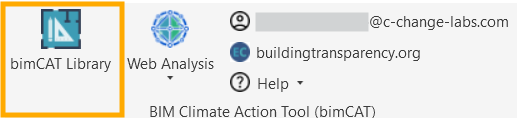
The **bimCAT Library** command allows access to a library of various Revit family types. These types could be annotated with the bimCAT data allowing to maintain user-refined collections and bimCAT builder data between different projects.
These bimCAT back-annotations are automatically created during the Export and updated during each Synchronization for every exported family type. Basically, the back-annotations contain information about bimCAT collections assigned to every exported Revit material, building elements created only on the Web App, builders, etc. This data is later used by bimCAT to restore collection refinements and builders when Revit elements of the corresponding family types are exported from other projects or during the new export of the same project.
The Library Browser allows users to create new libraries, export both system and loadable family types to RFA and RVT files, put them to existing libraries and import family types from a library to another Revit project.
After clicking the corresponding item in the ribbon, the following window will appear.
The window has two tabs: **Current Project** and **Library**.
.png?alt=media)